
Masks
Our eyes are adapted to focus in air, but not in water. To see clearly in the water, divers wear a mask to maintain a pocket of air in front of their eyes.
On this page you’ll learn about common mask features, how to select a mask, and how to take care of it.
Mask Features
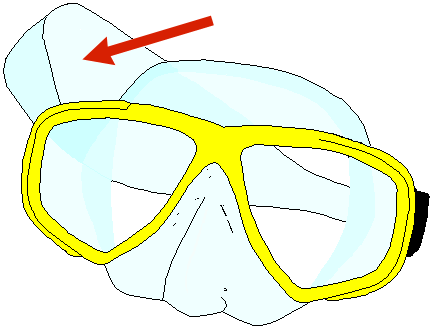
A suitable dive mask must include certain required functional and safety features.
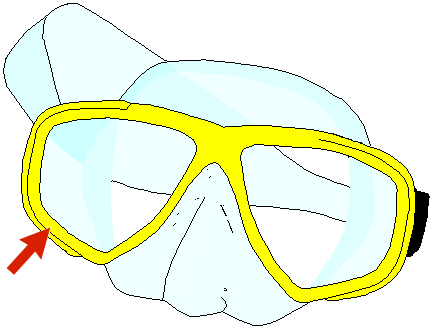
Frame
The frame is the central component of a dive mask and holds all of the parts together.
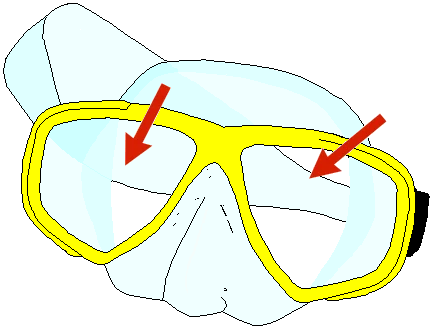
Lenses
The lenses must be made of tempered glass to resist scratching and protect your eyes in the event a lens shatters.
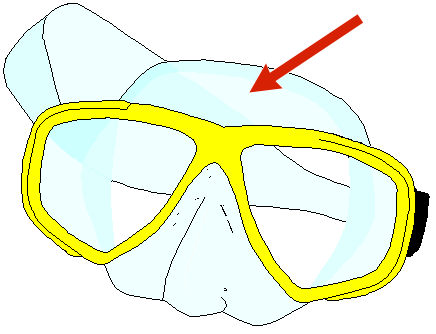
Skirt
The skirt is a molded piece of silicone that seals against your face. It’s soft and flexible to provide an effective seal with maximum comfort.
Most skirts feature a double-feather edge seal around the top and sides. This helps to improve the seal and minimize leaks.
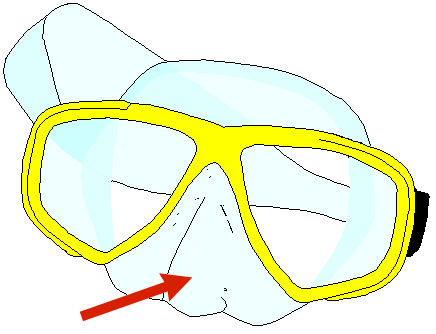
Nose Pocket
Dive masks must have a nose pocket. As you’ll learn later in this course, you need to be able to exhale into the mask to equalize its air pressure or clear water from the mask.
Swim goggles must never be used when diving because the air pressure inside the goggles cannot be equalized as you descend.
Strap
The strap holds the mask securely against your face. It must be split or widened at the rear to prevent it from slipping off the back of your head, and should be adjustable while wearing the mask.
Optional Mask Features
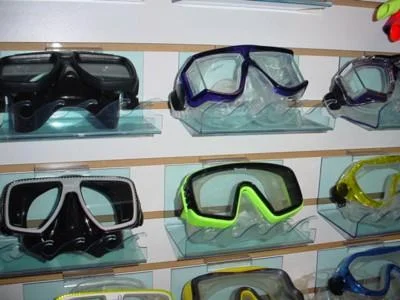
Like all dive equipment, masks are available in several styles and with optional features.
Low-Volume Design
In general, masks with separate right and left lenses are designed to position the lenses closer to your eyes. This improves vision and makes it easier to clear water from the mask.
Purge Valve
A purge valve is a one-way valve placed below the nose to assist in clearing water from the mask. This is not required, and you’ll learn how to clear water from a standard mask during this course.
Prescription Lenses
Most masks can be fitted with prescription lenses. Your dealer can provide you with information regarding availability of prescription lenses for a specific model.
Selecting a Mask
The most important considerations in selecting a mask are fit and comfort.
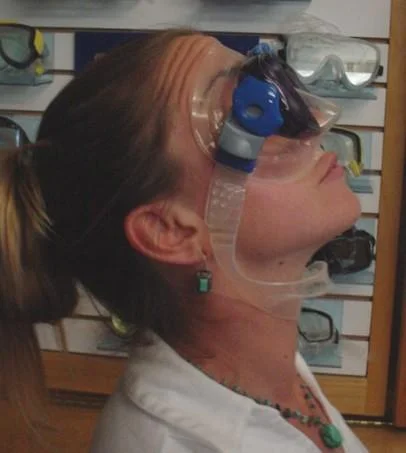
Your dive will be very unpleasant if your mask leaks, so make sure the skirt fits the contours of your face. To check its fit, hold the mask on your face and have a friend or salesperson check the fit of the skirt. There should be no significant gaps between the skirt and your face.
Next, gently suck in through your nose and tilt your head forward. If the mask remains on your face with minimal suction, the fit is acceptable.
Finally, pull the strap over your head and check for comfort. The skirt should feel soft, and no part of the frame should press against your face.
Defogging Your Mask
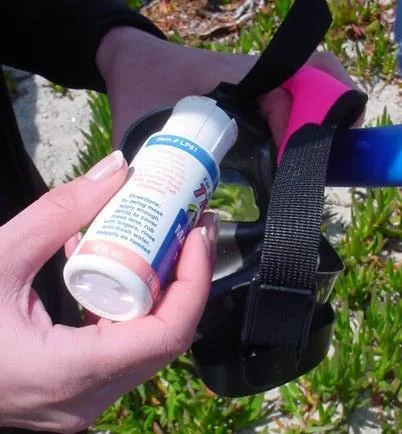
During your dive the temperature of the water causes the warm, moist air inside the mask to fog up the lens. This is easily prevented by defogging your mask before every dive.
You can defog your mask by simply spitting on the inside of the lens, rubbing the saliva around the lens, and rinsing the mask with water. Commercial defogging solutions are also available. If you use one of these, be sure to follow the manufacturer’s instructions.
When masks are assembled, a silicone lubricant is sprayed onto the components to make assembly easier. If not removed, the lubricant makes defogging procedures ineffective. You can remove the lubricant by rubbing the inside of the lens with a mild abrasive such as toothpaste. After rinsing the toothpaste from the mask, it should be ready for defogging.
Storing Your Mask
Heat, humidity, ozone, and ultraviolet rays are part of any dive day. But over time, these can harm the rubber and silicone your skin gear is made of.
To prevent these elements from damaging your skin gear, store it in a cool, dark, and dry place. If your mask came with a storage case, use it to protect the mask’s skirt. Hang your fins or lay them flat to prevent warping. Allow the gear to dry completely before storage to prevent mildew from forming.
Storage between dives is equally important. Gear should be kept as clean as possible, and away from direct sunlight. A short period in the sun can soften the gear and cause permanent deformation. For example, leaning your fins up against a wall exposed to direct sunlight could permanently warp them.
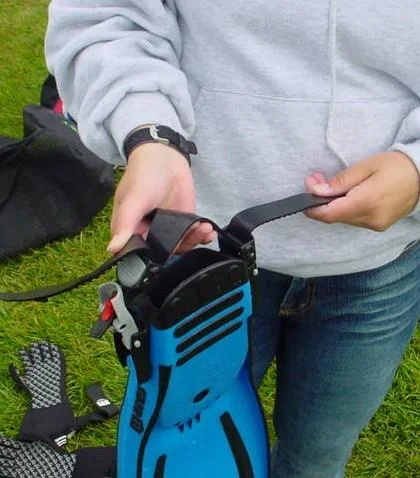
Inspecting Your Gear
Mask straps, fins straps, and snorkel keepers undergo a lot of stress and stretching. Over time they weaken and may break.
Be sure to inspect your straps for signs of weakness before every dive trip. Replacements are readily available, and are included in most “save-a-dive” kits. It’s best to discover a potential failure before you find yourself on a boat with broken straps and no replacements.